
PlantaGo
Eco City Assistant / Educational Tech / Recycling Scanner / Air Quality / iOS App
My role
Timeline
Team size
Link
Product
The app helps users adopt a sustainable lifestyle by offering a material recognition scanner with recycling guidelines, a map of sorting and recycling locations, and information on eco-events and challenges. It also provides real-time air quality updates and educational content about eco-communities.
USers
The users were residents of Kharkiv, Ukraine, with eco-activists as the primary target audience. The long-term goal was to expand to other major cities across Ukraine. This process was gradual, supported by a web version with an admin panel for managing and updating map data.
Context
Before I joined, there was only a website with a recycling map, but its limited functionality led to low engagement. Research showed the need for a mobile app with expanded features. I worked in a team of six designers, where we actively collaborated on research, testing, and development, each managing a specific area of responsibility.
activities
- Competitor Analysis
- Surveys & User Interview
- Empathy Map
- Persona Creation
- Jobs To Be Done / User Story
- CJM Workshop & Brainstorming
- Effort / Impact Matrics
Problem
There was no single platform providing real-time environmental data, recycling guidance, and community-driven eco-events. Users had to rely on multiple sources, making it difficult to stay informed and take action. Scattered information and a lack of engagement tools limited the impact of sustainability efforts.
Solution
We integrated all eco-related services into a single app, eliminating the need to rely on multiple sources for recycling guidelines, environmental data, and community events. Eco City Assistant provides a seamless experience by combining material recognition, real-time air quality updates, a sorting and recycling map, and educational content. This centralized approach makes it easier for users to adopt sustainable habits, stay informed, and actively participate in eco-initiatives.
Main Functional
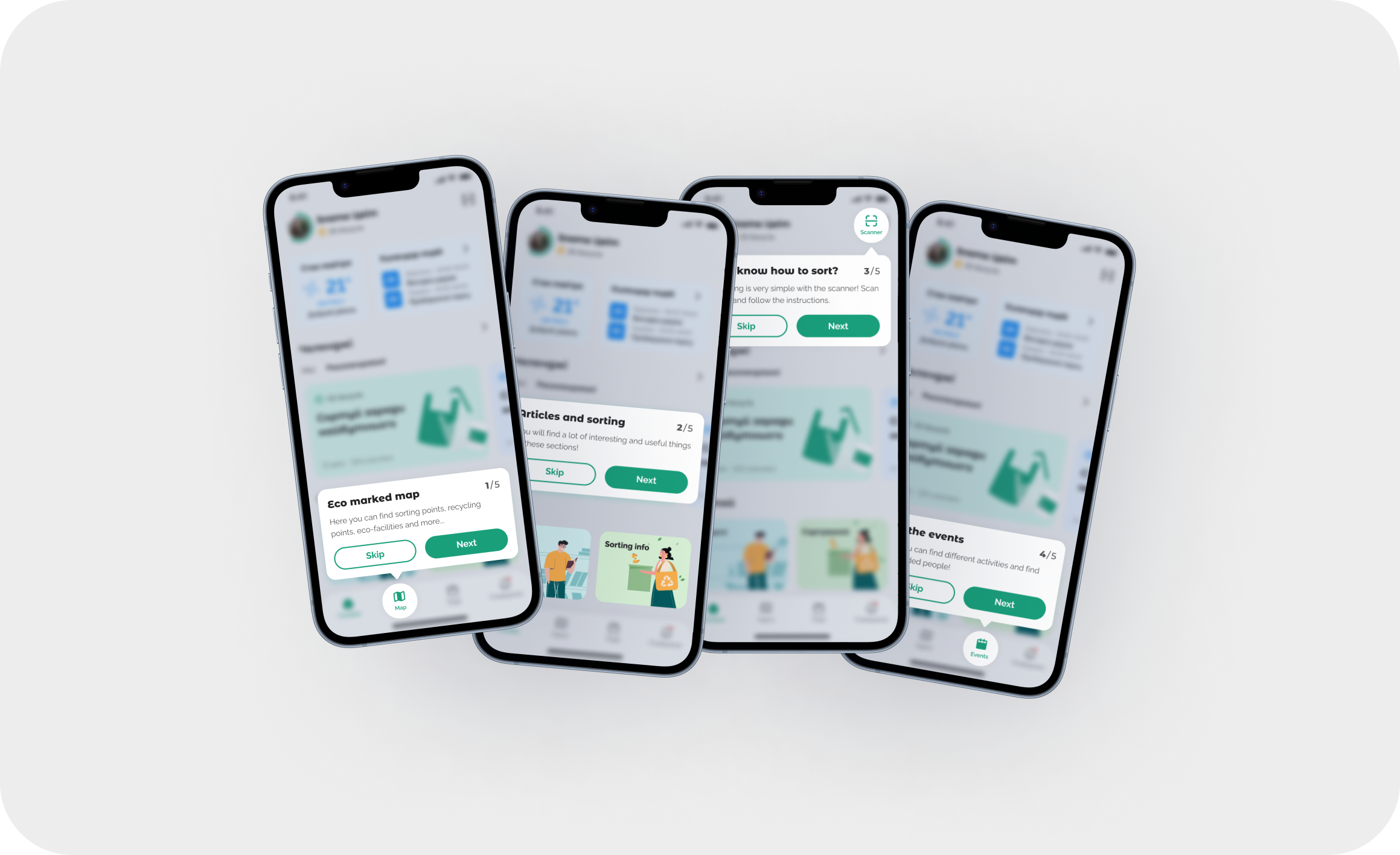
Onboarding
To create the best wizard, you need to know your target audience.Our target audience is small business owners who want to quickly create a site to increase commerce. This is a fairly wide audience, because the categories of small business can be from the beauty industry with services to furniture stores.
Main Screen
The main screen contains the most necessary functions of the application:
- Profile & Bonuses
- Scanner
- Air Condition
- Event Сalendar
- Challenges
- Articles
- Sorting Info

Eco map
Tired of solving enviromental problems sitting on the couch?
On the map, you can find the nearest eco-establishment, sorting points, water machines and the route to the point can be paved with Google Maps, because from the testing we realized that this is the best solution for users.

Scanner
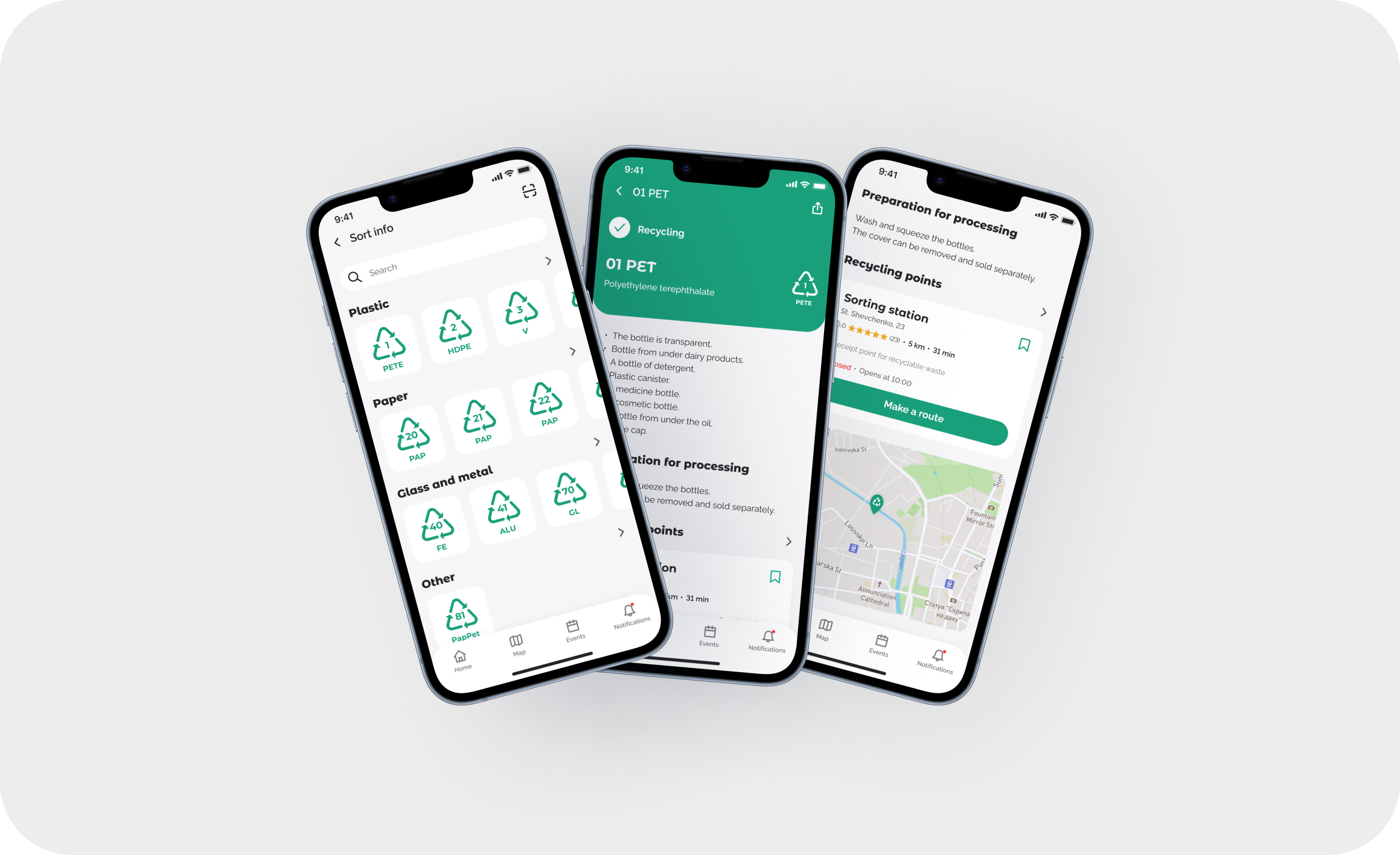
In just three steps, the scanner will quickly tell you what the labels means, how to prepare it for recycling and, of cource, where to send it - to the landfill or the sorting plants.

Refuce & Reduce
The Sort section will acquaint you with both universal sorting rules and those adapted to sorting conditions. here are the history of markings and you can immediately find a list of recycling points, map the route and directly contact the maintenance of the sorting points.
Articles to Read
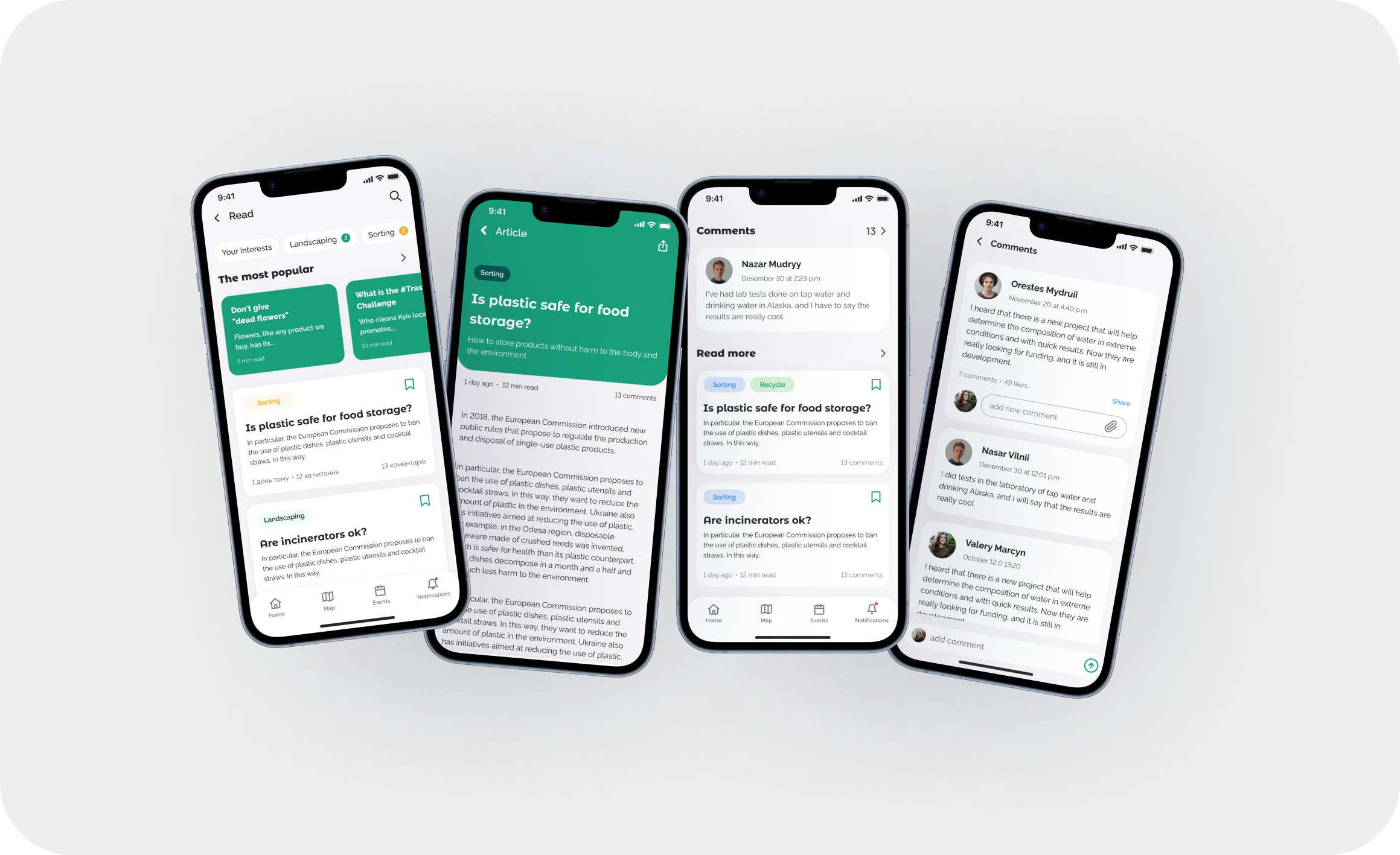
Articles help you easily keep track of interesting topics and publications, and you can quickly find the topics you want with personalized search settings. In addition, you can join the discussion in the comments.
Events
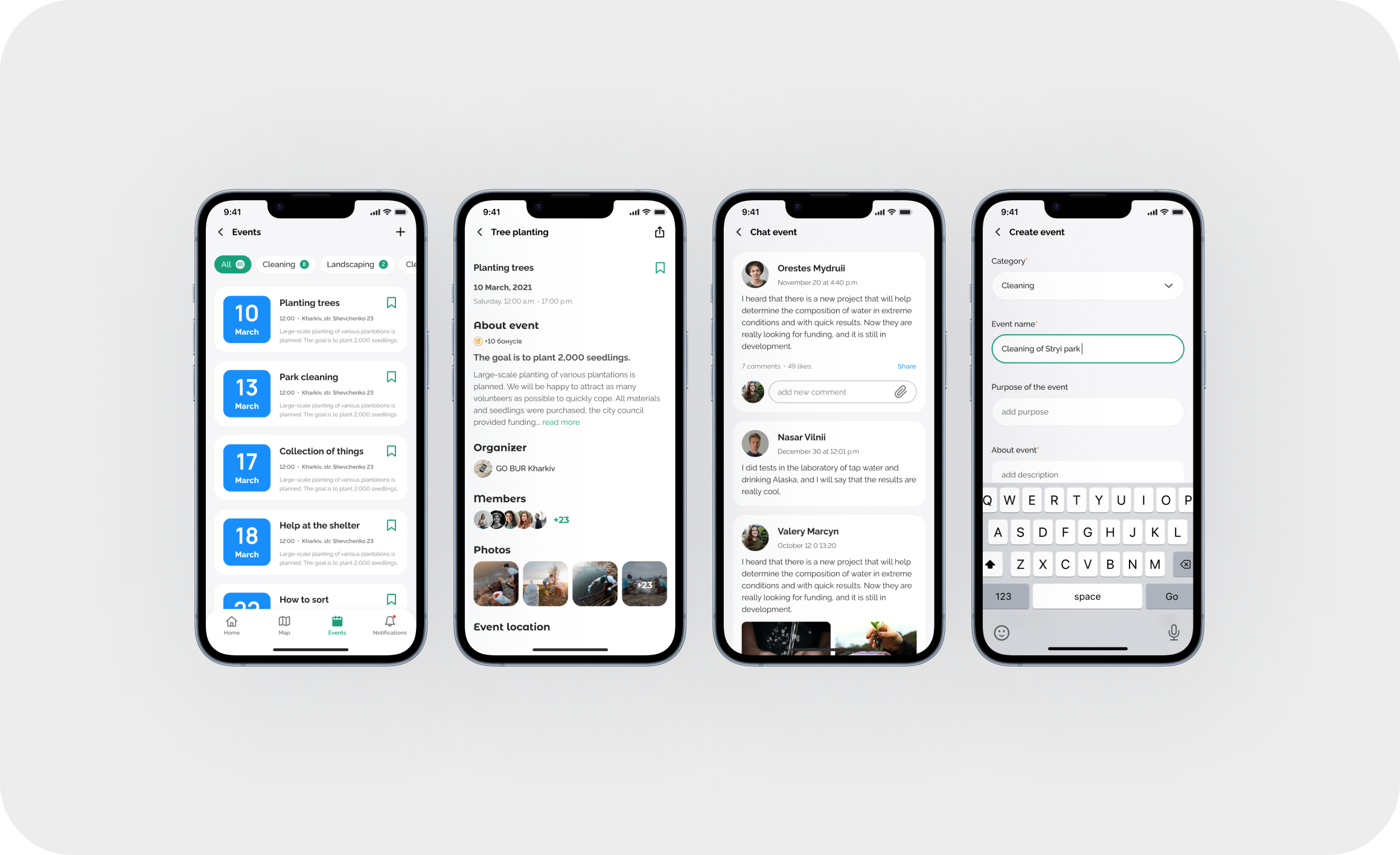
Here you can aslo join various eco events, as well as create you own and everything is easily fitered by category.
Challenges
Challenges will help to easily implement a new Eco habit in everyday life, as well as go through challenges withfriends.

Bonuses and Levels
The application has a system of bonuses and for all visited eco events, completed challenges and others activities will be credited bonuses that can be easily exchanged with partners. The applications also has gamification, which will stimulate and raise levels.

Work Process
Competitive analysis
There are no competitors that have the same functionality, so I singled out the competitors by category:
- Garbage, sorting and recycling;
- Environmental care and ecological indicators;
- Eco city routes.
Survey & User Interview
It is importent that access to sorting information is easy and fast.
Most users prefer the mobile version.
Most users are interested in sorting and recycling garbage.
It is importent to have collected infirmation on Eco events in the city and the country.
Users are actively involved in volenteering.
Empathy Map
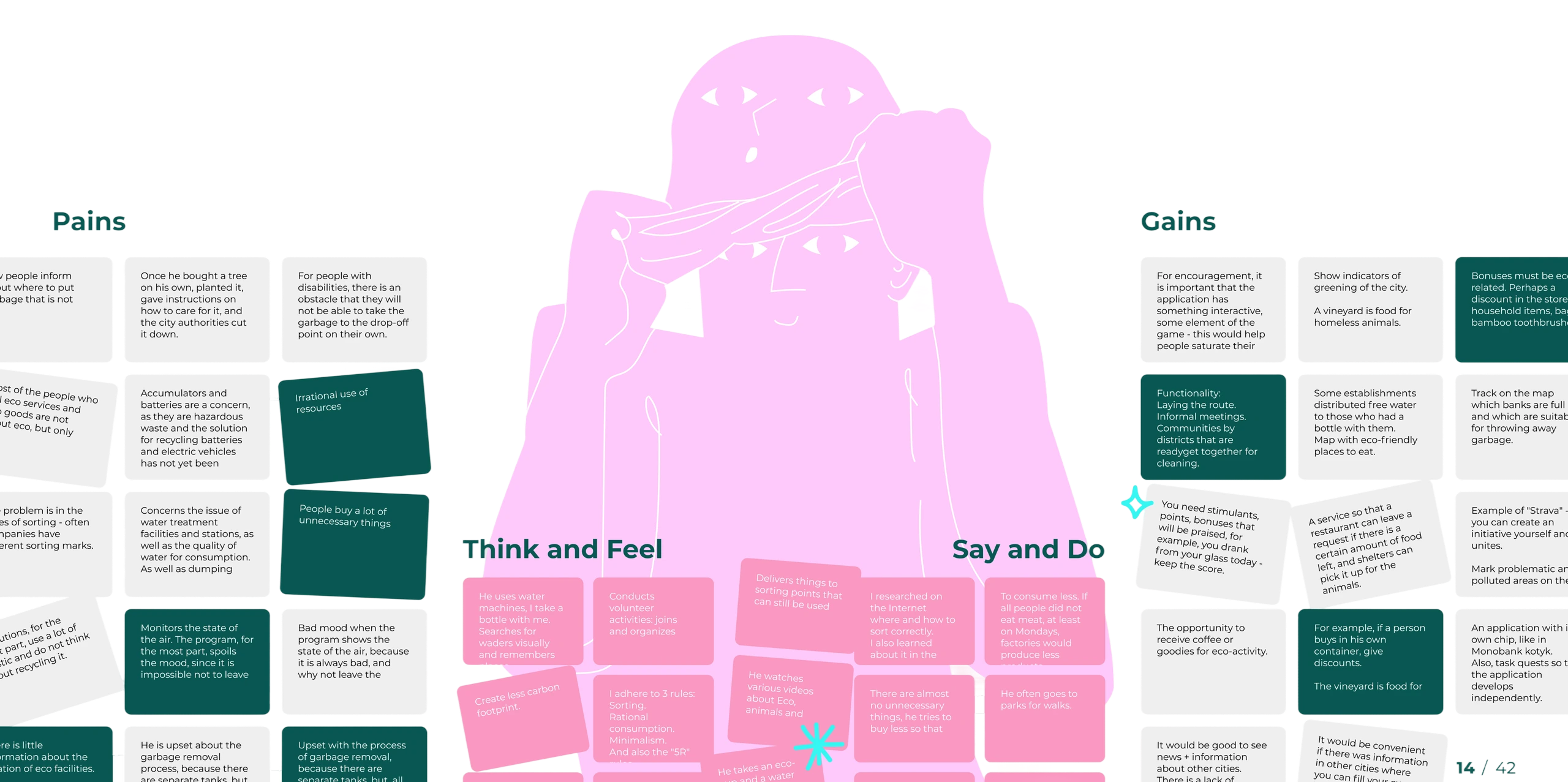
We laid out all the answers on an empathy map to better understand the target audience and highlight their пфшті and pains.
Persona

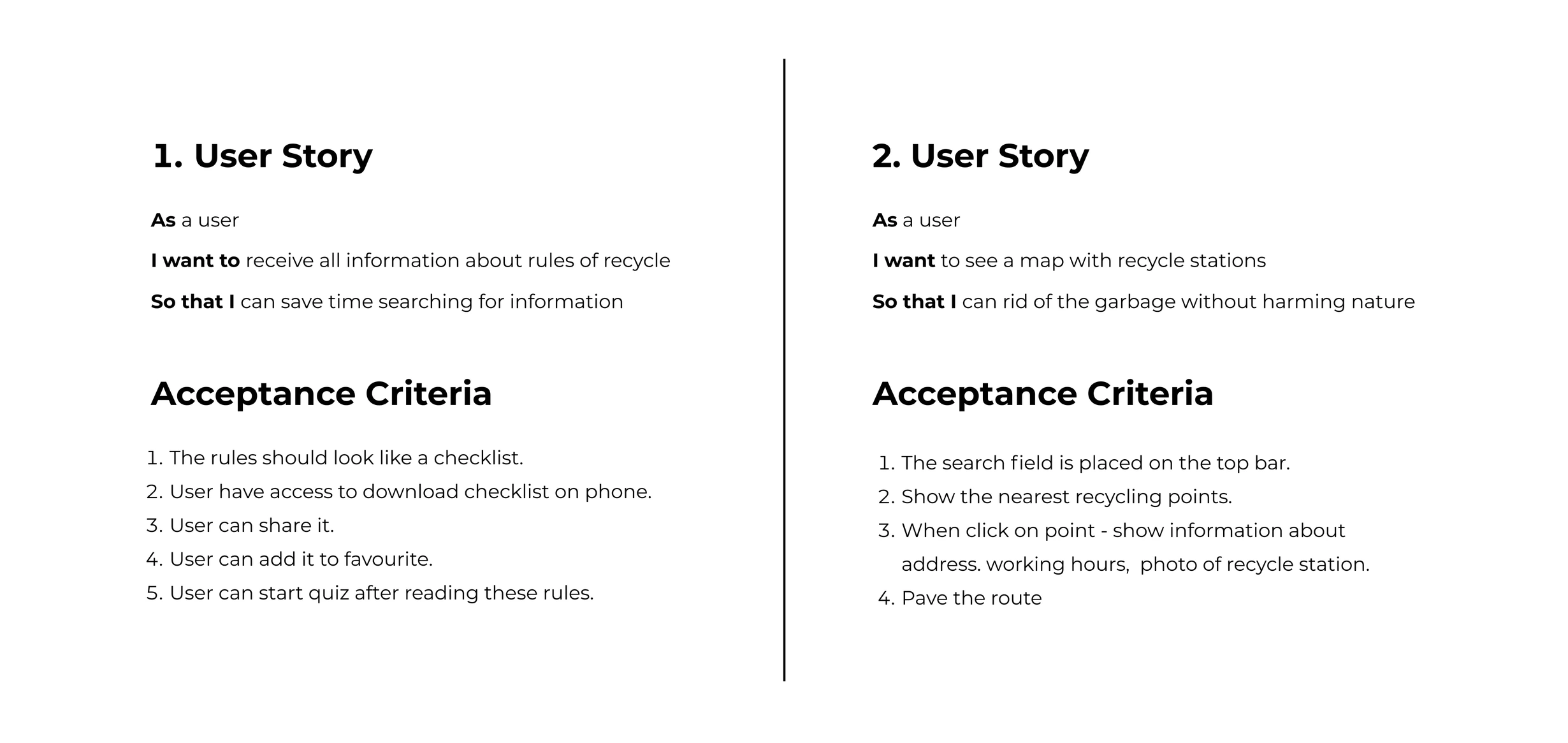
JTBD

User Stories
CJM Workshop
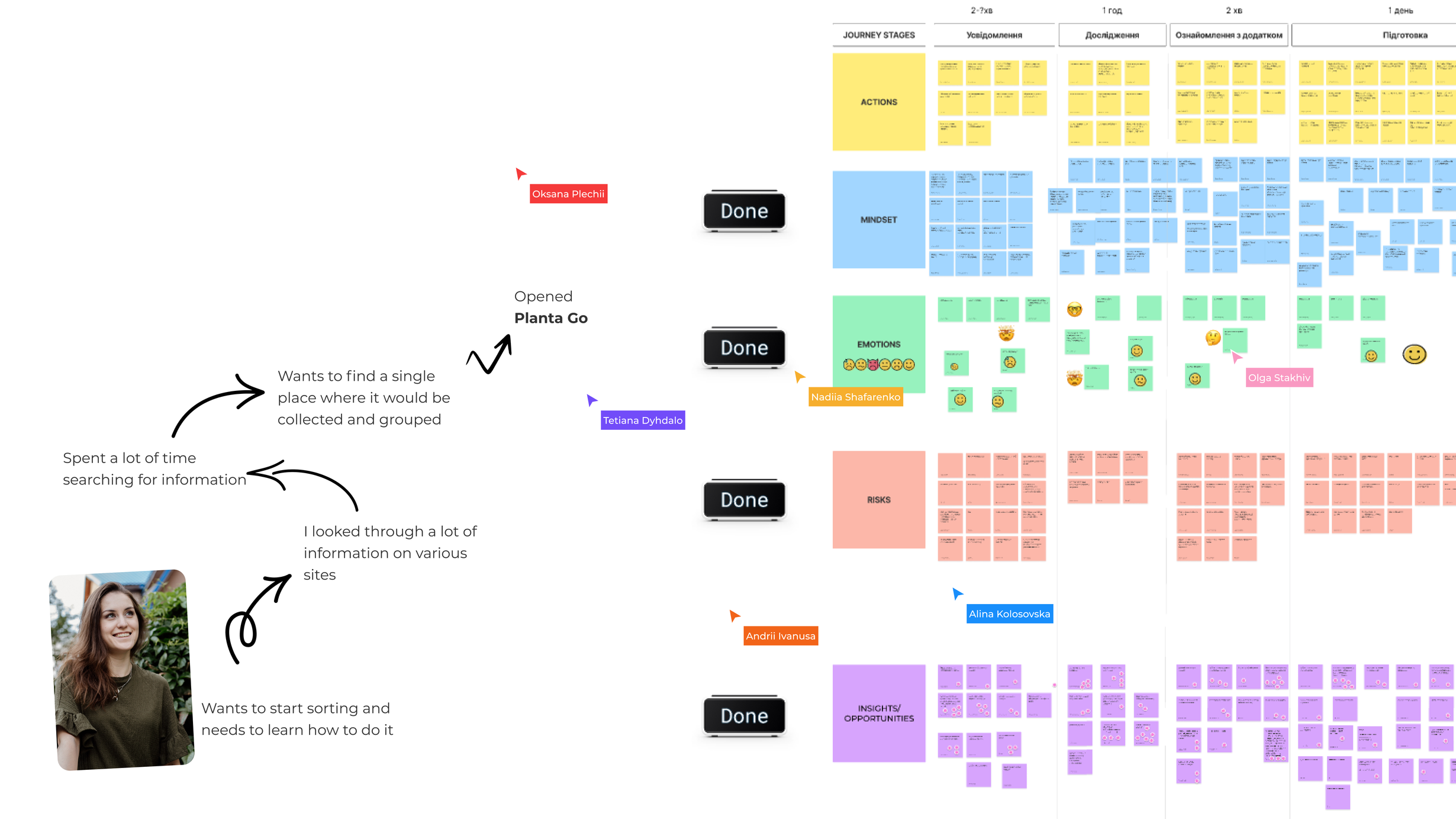
We held the workshop for 2 days, in total it took more than 6 hours. It was attended by designers, a stakeholder and 3 respondents.
Brainstorm

Effort / Impact Matrix
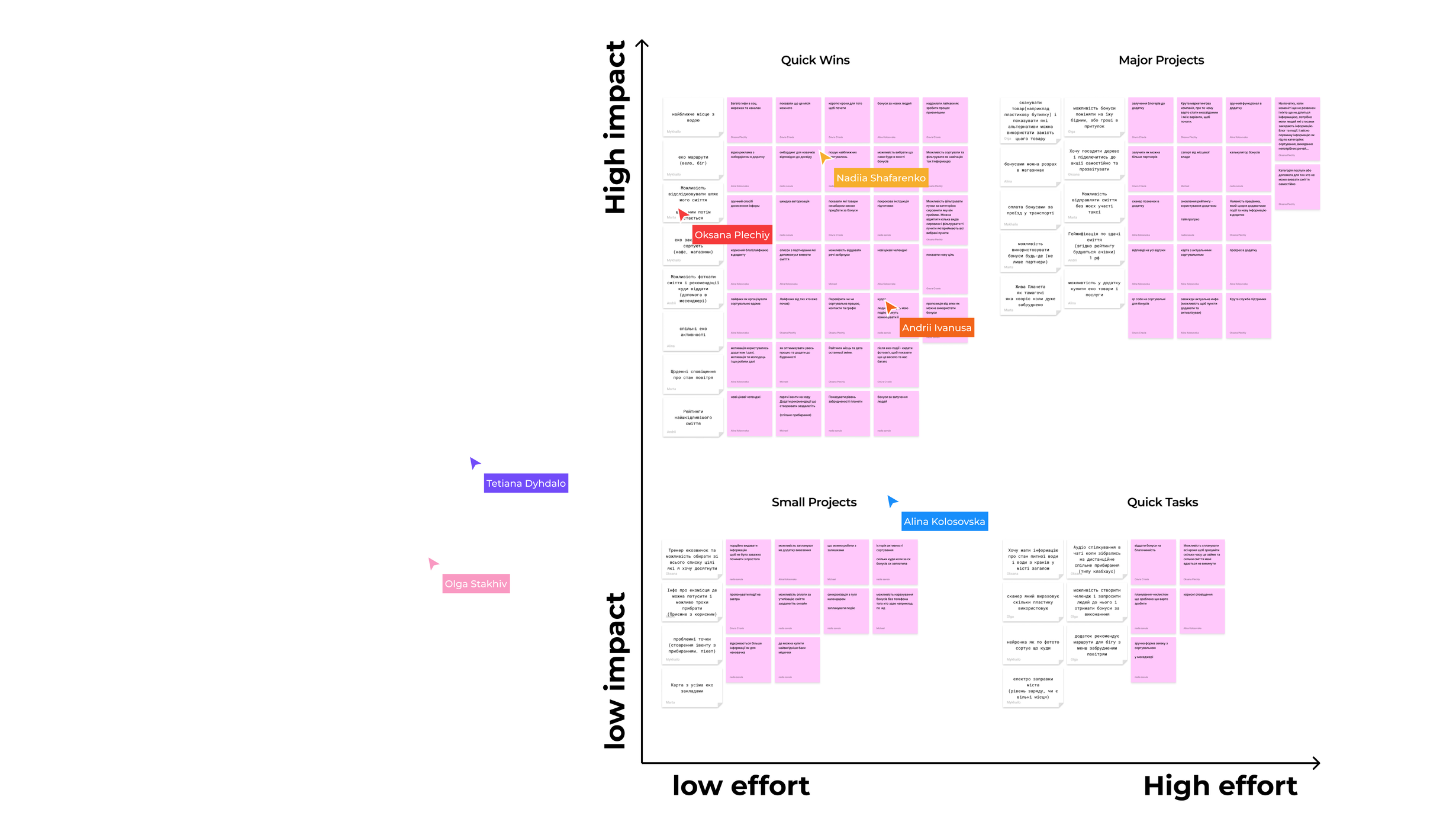
With the help of the matrix, we prioritized the functionality, which is the most important and the easiest to implement, to start with. And also which difficult but important functions should be added immediately, and which can be postponed for the next release.
Information Architecture
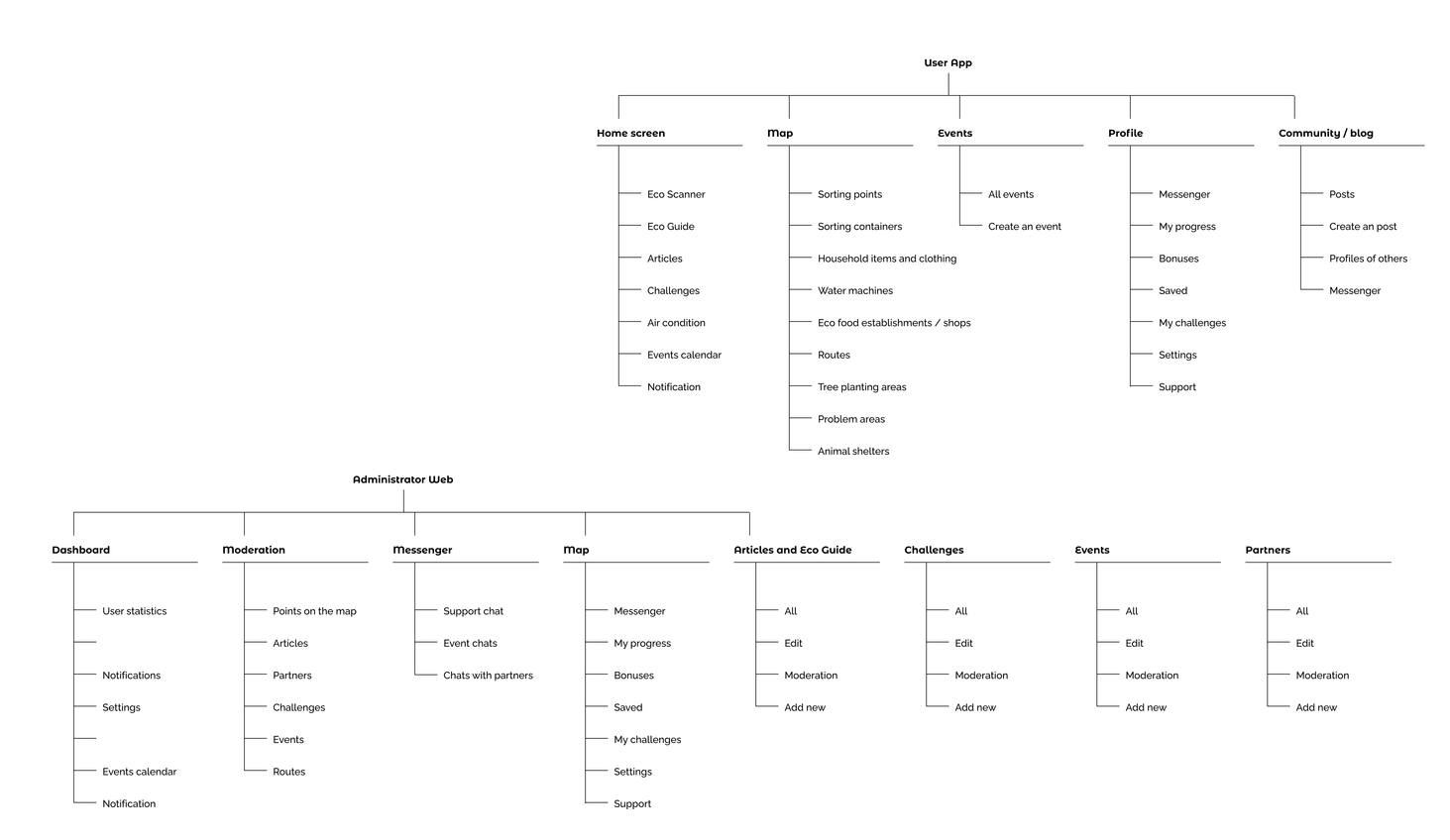
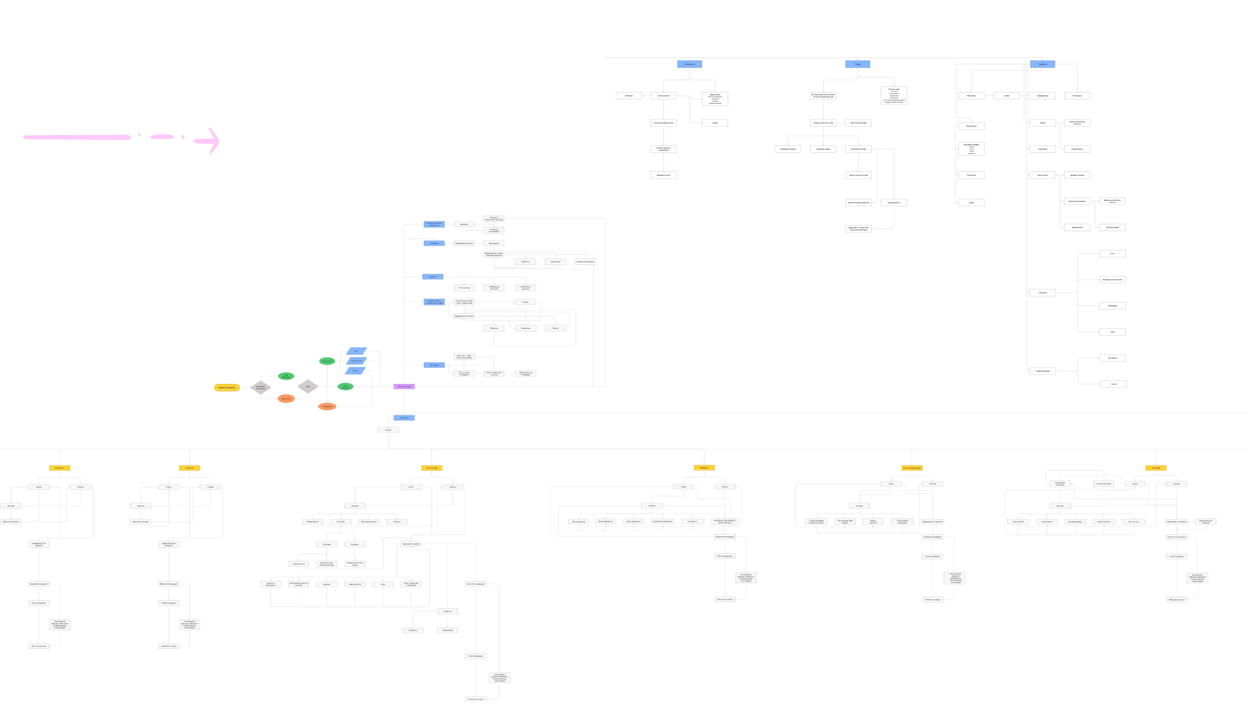
User flow
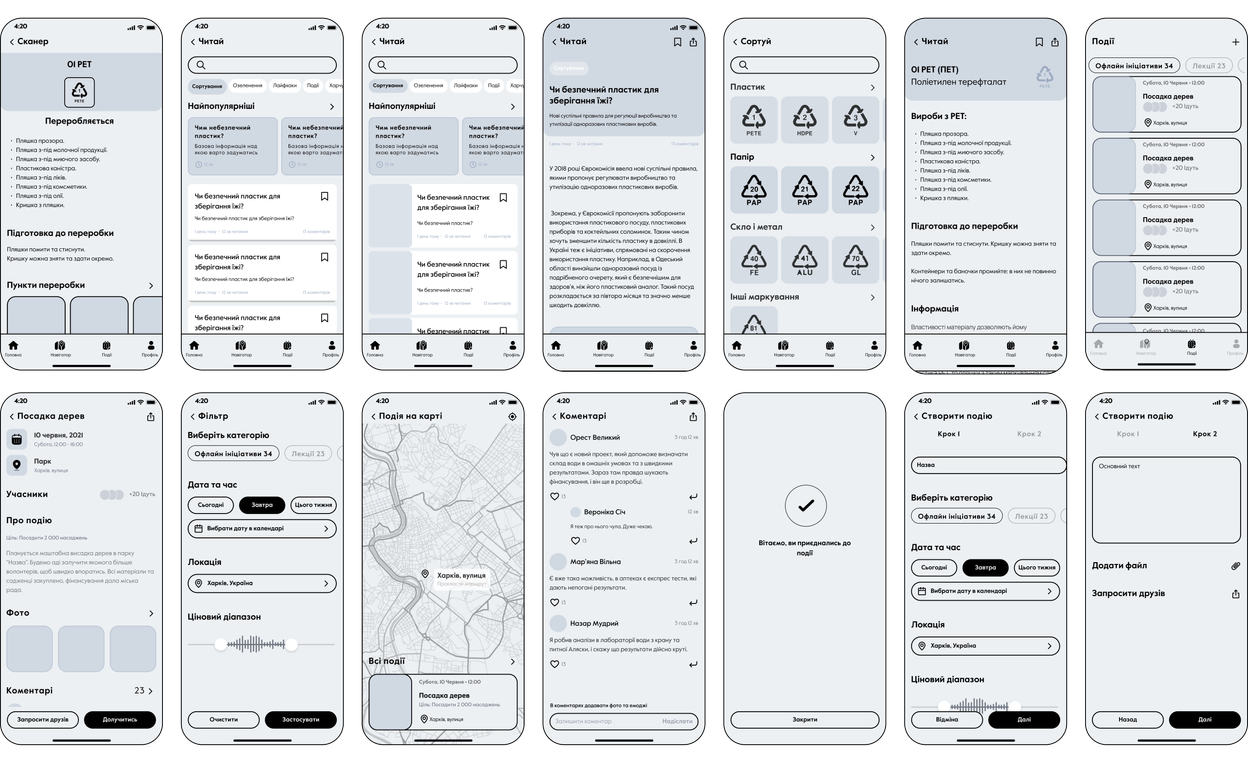
Wireframes
Usability testing
Unmoderated testing was performed in Maze and gave us a wealth of analytical information to process.
Moderated testing gave answers to why people have given the flow so far, what is wrong with the functionality and where exactly and why they had difficulties.

Main challenges
Reliable Air Quality Data
Ensuring the app provided accurate and up-to-date air quality information required integration with verified environmental monitoring sources and real-time data processing.
Material Recognition Accuracy
The AI-powered scanner needed extensive validation to ensure precise material identification, minimizing false recommendations for recycling.
User Engagement & Gamification
Encouraging sustainable habits meant incorporating gamification elements, eco-challenges, and community-driven activities to keep users engaged.
Partnerships & Data Maintenance
Establishing collaborations with waste management services, environmental agencies, and eco-communities was essential for maintaining up-to-date recycling point data and event listings.
Selected projects
I've gained valuable experience in both B2B and B2C environments, with a focus on industries like SaaS, E-commerce, Fintech, and Marketing.
WORK WITH ME
WORK WITH ME
WORK WITH ME
WORK WITH ME